Commercial swamp cooler repair in Phoenix
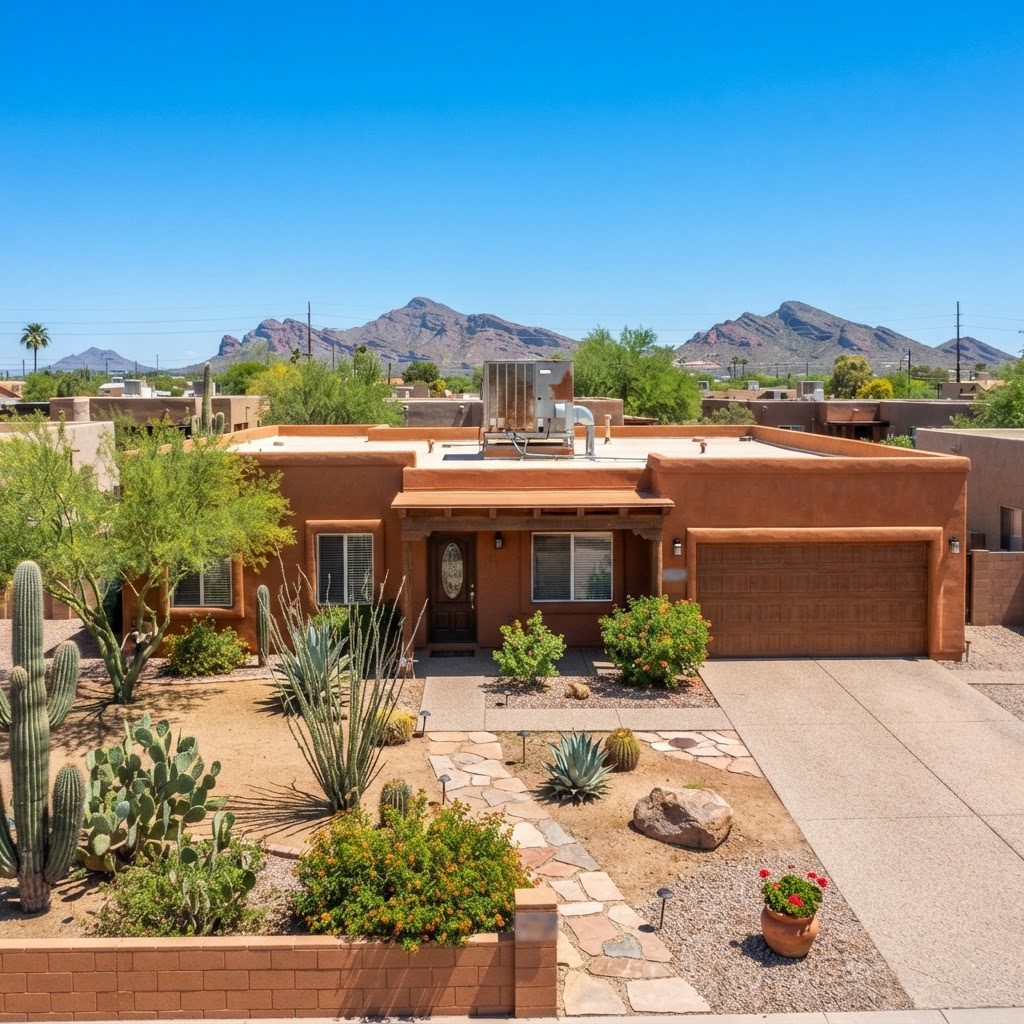
Commercial evaporative cooling is a different job from a house on a slab. A strip center, a warehouse office, a restaurant patio or a shop floor usually runs larger belt-driven units on the roof, often two or more, and a single failed unit takes a whole zone of the building out of service. This page covers what commercial cooler repair in Phoenix actually involves and how to get a request in front of local companies that work on that equipment.
How commercial evaporative cooling differs from a house
The physics is the same and the maintenance is not. Commercial units move far more air, so belts, bearings and blower wheels carry real load and fail on a schedule. Many sit in dust-heavy roof environments where pads load up weeks faster than a shaded residential unit. Roof access, curb adapters, electrical disconnects and in some buildings a permit for anything beyond like-for-like repair all add steps that a homeowner never sees.
What usually fails first on a commercial cooler
In order: pads, belts, blower bearings, the water distribution spider and pump, then the motor. Las Vegas and Phoenix both punish pads, but Phoenix roof units also bake on an unshaded roof deck, so a pad set that lasts a season on a house can load solid in six weeks on a commercial roof.
Multiple units, one building
A building running four coolers is a scheduling problem as much as a repair problem. It pays to have every unit's model and serial recorded, so a company can arrive with the right pads, belt size and pump for each roof, and so a repeat failure on the same unit is visible rather than lost among the others.
Zone failures that look like a broken cooler
A zone that will not cool is not always the unit. Duct runs that have come apart above a ceiling, dampers stuck closed, and a thermostat calling for cool from the wrong sensor all present as a failed cooler. That is the first thing a competent company checks before quoting equipment.
Snowbirds, seasonal tenants and shutdowns
A commercial cooler that sat idle through the cooler season comes back with a seized pump bearing or a cracked pad frame. A startup visit in April costs far less than an emergency call in June.
What to have ready for the request
Building address and roof access contact, unit count, whether any unit is still running, and the symptom for each. That is enough for a company to judge whether it is a parts trip or a diagnostic trip.
What commercial cooler repair costs in Phoenix
Prices scale with unit size and roof access rather than with the type of building. Typical ranges, confirmed on site by the company that visits:
- Commercial diagnostic visit: roughly $125 to $250
- Pad set, commercial size: roughly $180 to $450 installed
- Belt and blower bearing service: roughly $200 to $500
- Pump or water distribution parts: roughly $200 to $450
- Blower motor: roughly $450 to $1,200, higher for large belt-drive units
Preventive maintenance beats outage
Two visits a year, before the season and mid-season, is the standard for commercial cooling in the Valley. The mid-season visit matters most here because a pad set that loaded in June will starve airflow through July and August, and a starved cooler runs hot and fails early. The company that shows up twice a year is also the one that answers in a heat wave.
How to get a commercial cooler repaired
Submit one request with the building details and the symptom, and it routes to local companies that do commercial evaporative cooling in the metro. Requests are free, and you only pay the company that does the work. Nobody can promise an arrival window before a company accepts the job. For a single residential unit instead, see the residential cooler repair page.